For retailers, wholesalers, and procurement teams, “healthy indoor lighting” is more than a wellness trend. It’s a practical specification that affects shopper comfort, employee productivity, product appearance on shelves, and returns/complaints after installation. The healthiest indoor lighting is the combination of the right color temperature, high color quality, low flicker, and comfortable glare control—delivered in fixtures that meet required certifications and hold up in real projects.

What “healthy lighting” means in real-world projects
When buyers evaluate indoor lighting for commercial and residential channels, the healthiest options typically share four traits:
Supports alertness by day, relaxation at night (appropriate CCT/Kelvin for the space).
Shows true product colors (high CRI, especially important for retail and supermarkets).
Reduces headaches and eye strain (flicker-free drivers and stable dimming).
Avoids harsh glare (good optical design, diffuser/lens choice, and beam angle).
1) Color temperature (Kelvin): match the space to the job
Color temperature (CCT) is the fastest way to influence how a space feels. Think of it as buying a “time of day.”
2700K–3000K (warm white): hospitality, residential, boutique retail, lounges—comfort-forward.
3500K–4000K (neutral white): general retail, corridors, offices—balanced and widely accepted.
5000K (cool/daylight): task-heavy areas, workshops, some back-of-house zones—maximum perceived brightness.
Buyer tip: For chain rollouts, consistency matters. Ask suppliers about binning/SDCM control to reduce fixture-to-fixture color variation across a large store or multi-site project.
2) CRI (and color quality): critical for retail and supermarkets
CRI (Color Rendering Index) measures how accurately a light source reveals colors compared with natural light. In merchandising, CRI impacts how fresh produce looks, how textiles read, and how “premium” products feel under lighting.
CRI 80+: acceptable baseline for many general applications.
CRI 90+: recommended for retail displays, supermarkets, showrooms, and any environment where color drives sales.
Buyer tip: If your customers complain that reds look dull or skin tones look “off,” look beyond a single CRI number. Consider asking for additional color data (for example, strong red rendering) when the application demands it.
3) Flicker-free performance: protect visual comfort and reduce complaints
Even when flicker isn’t obvious, poor driver quality can create rapid light modulation that contributes to discomfort, headaches, and camera banding (a concern for retail security systems and social media content in stores).
Request flicker-free or low flicker driver options.
Confirm dimming compatibility (Triac/0–10V/DALI, depending on the project) and stability at low dim levels.
For large installations, prioritize drivers with surge protection and reliable thermal management.
4) Glare control and optics: “bright” should not mean “harsh”
Healthy lighting is comfortable lighting. A fixture can meet lumen targets and still feel unpleasant if glare is high. Optics and beam angle are key—especially for downlights used in aisles and open areas.
Beam angle: narrow for accents, medium for general areas, wide for uniform coverage.
Diffusers/lenses: soften brightness and help uniformity.
Recess depth and trim design: can reduce direct view of the LED source.
Where LED pot lights and LED slim lights fit best
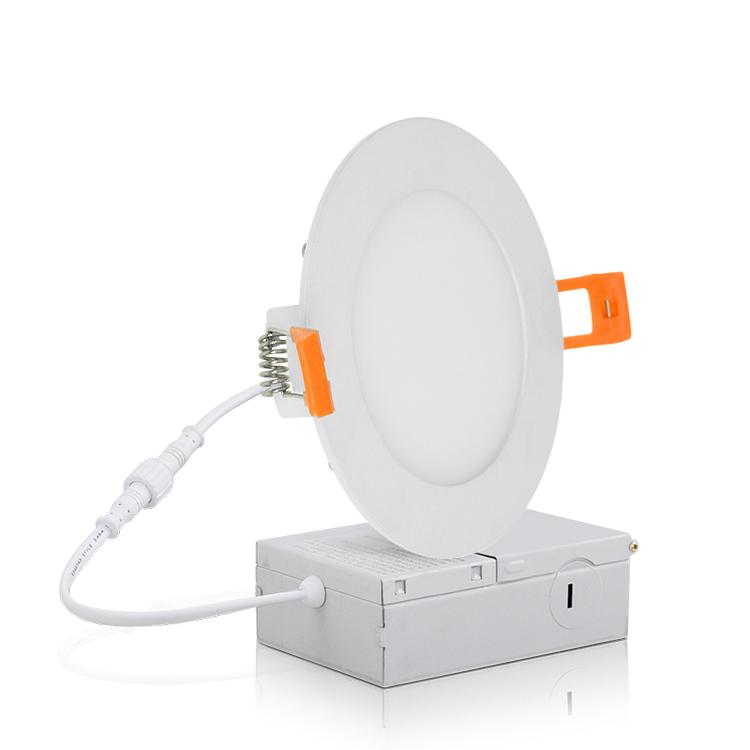
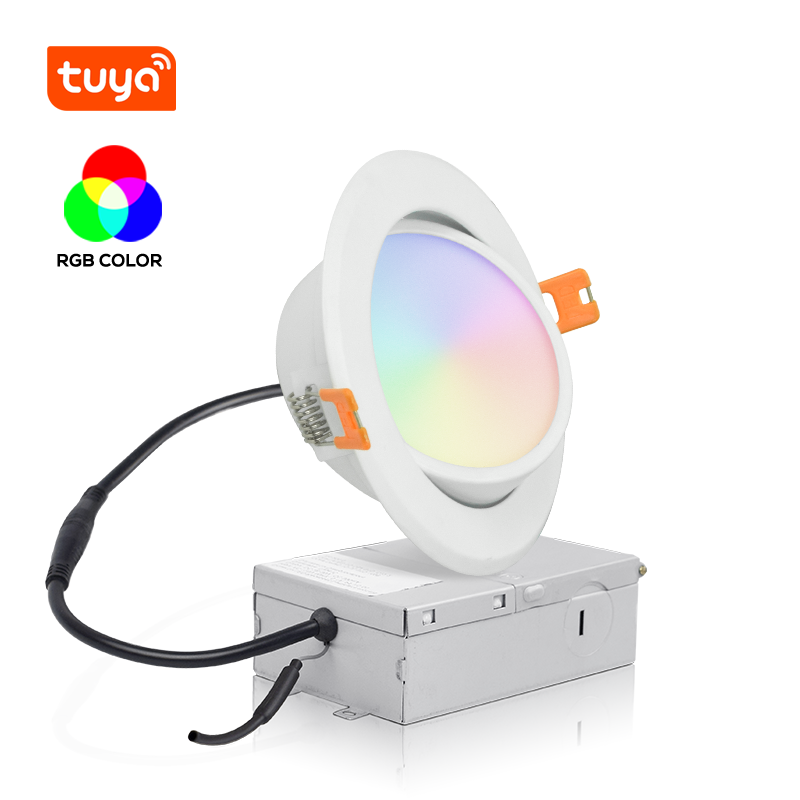
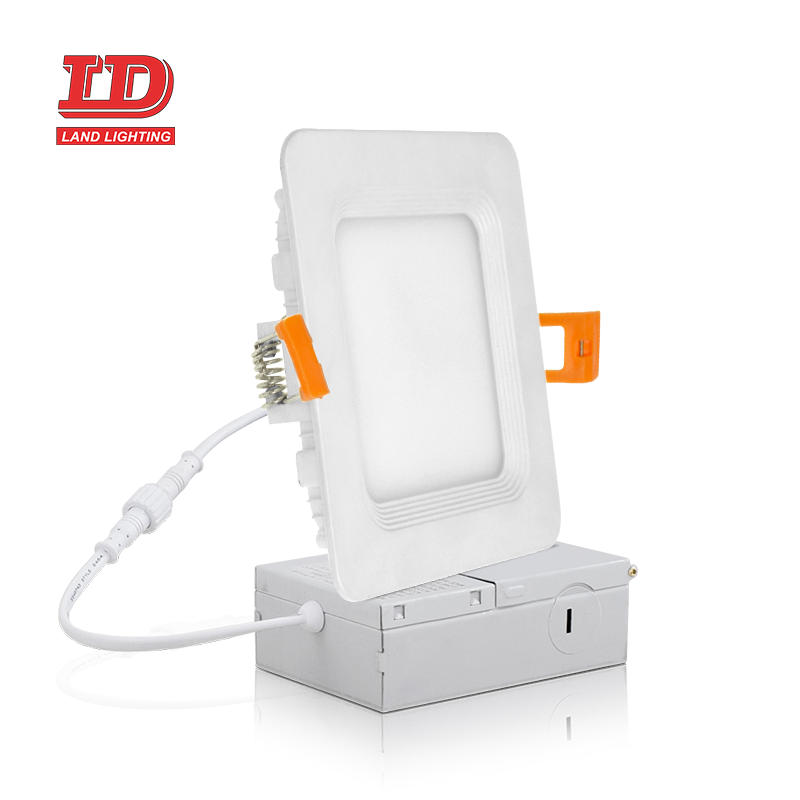
Two popular categories for modern indoor projects are LED pot lights (recessed downlights) and LED slim lights (ultra-thin downlights for shallow ceilings). Both can be “healthy” choices when specified correctly.
LED pot light: strong option for new construction and commercial ceilings where housing and depth are available; often supports better optical control.
LED slim light: ideal for remodels, low-plenum spaces, and fast installation; great for distribution channels that need broad compatibility.
Buyer tip: For channel partners, the healthiest product experience includes fewer installation issues. Confirm key field details such as cutout size, IC rating where needed, damp/wet location suitability, and connector type.

A practical spec checklist for procurement teams
When sourcing indoor lighting at scale (retailers, wholesalers, big-box, and procurement companies), use this checklist to reduce risk and improve end-customer satisfaction:
CCT options: 2700K/3000K/4000K/5000K (or selectable CCT if your market prefers one SKU).
CRI: 80+ baseline; 90+ for color-sensitive retail categories.
Flicker: flicker-free/low flicker driver; stable dimming.
Glare comfort: lens/diffuser choice, beam angle, and recessed design.
Reliability: thermal design, driver brand/quality, surge protection.
Compliance: confirm the certifications required for your sales channel and region (for example, UL/ETL, FCC, RoHS, Energy Star/DLC where applicable).
Consistency: color bin control to keep installations uniform across stores and projects.
Supply readiness: sampling, lead time, packaging, and after-sales/warranty terms.
Bottom line: the healthiest indoor lighting is a controlled, comfortable, high-quality system
For most indoor projects, the healthiest lighting is not a single bulb type—it’s a well-specified LED solution that balances CCT, CRI, flicker, and glare, delivered with consistent manufacturing quality and the right compliance for your market. When those fundamentals are right, retailers and end customers get better comfort, better product presentation, and fewer headaches—literally and operationally.
Looking for a reliable factory partner for LED downlights?
If you’re sourcing LED pot lights, LED slim lights, or other indoor LED fixtures for retail, wholesale, supermarket projects, or procurement programs, you can explore product options, request a quote, or ask for samples at LANDLIGHITNG.