Is it safe to have LED lights in your room
You’ve finally swapped out those old bedroom lamps to save energy, but staring up at that crisp white glow might make you ask: Is it safe to have LED lights in your room?
According to electrical engineers, evaluating LED versus incandescent health risks requires looking past physical fire hazards and focusing directly on our biology.
Harsh artificial lighting easily tricks your brain into thinking it’s midday, fueling that dreaded midnight scroll anxiety and disrupting your sleep. Navigating the biological safety of LED lights simply requires knowing what specifications to prioritize for your health.
Cool to the Touch: Why LEDs Rarely Start Fires Compared to Old Bulbs
We used to worry about traditional bulbs scorching our lampshades. An old incandescent is essentially a space heater that happens to glow, while an LED is more like a tiny computer chip. Instead of blasting heat outward, LEDs rely on built-in heat dissipation, pulling warmth away from the source so they remain safely cool to the touch.
Because of this shift in technology, many people understandably wonder: do LED strip lights catch fire? The risk is incredibly low, largely because these strips operate on gentle low-voltage power rather than the standard 120 volts running through your walls. Still, improper installation—such as burying an LED pot light beneath heavy attic insulation or bunching powered strips together—can trap warmth and ruin basic LED overheating prevention.
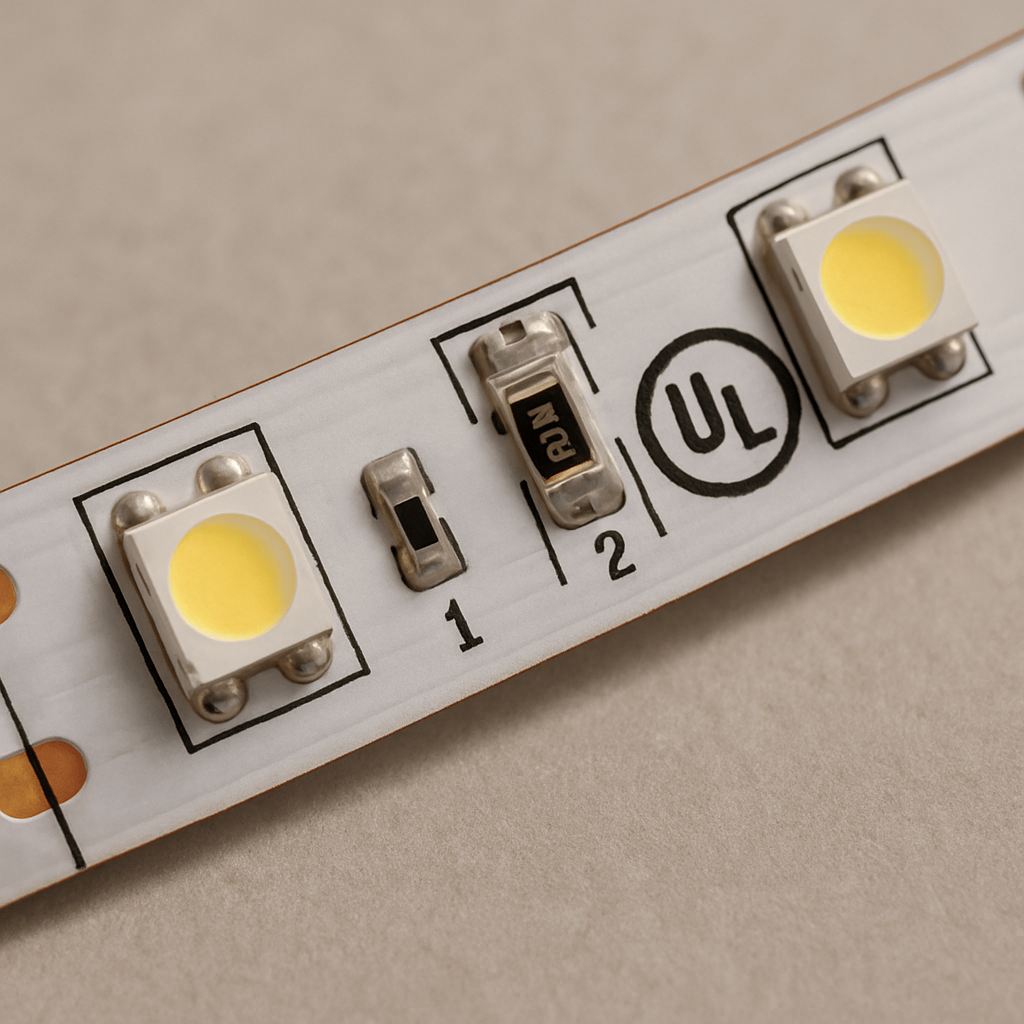
To avoid these rare risks entirely, always buy properly tested lighting. Check for these three indicators of safe UL-listed LED strips:
A prominent "UL Listed" mark proving the product passed strict fire safety tests.
A thicker, sturdy circuit board (PCB) that feels robust rather than flimsy.
High-quality, heat-dissipating adhesive tape on the back.
Ultimately, while physical fire hazards are largely solved, these modern fixtures introduce an entirely invisible challenge. With your physical home safe, the next logical step is understanding how this high-tech glow affects your biological rhythm when it’s time to sleep.
Managing the 'Blue Light' Hazard: How to Protect Your Melatonin and Sleep Quality
Have you ever noticed how a crisp bathroom light instantly jolts you awake at night? Your brain uses sunlight to set its internal clock. When a bedroom fixture mimics the midday sun, it triggers circadian rhythm disruption. This blue light impact on sleep quality tricks your mind into working instead of resting.
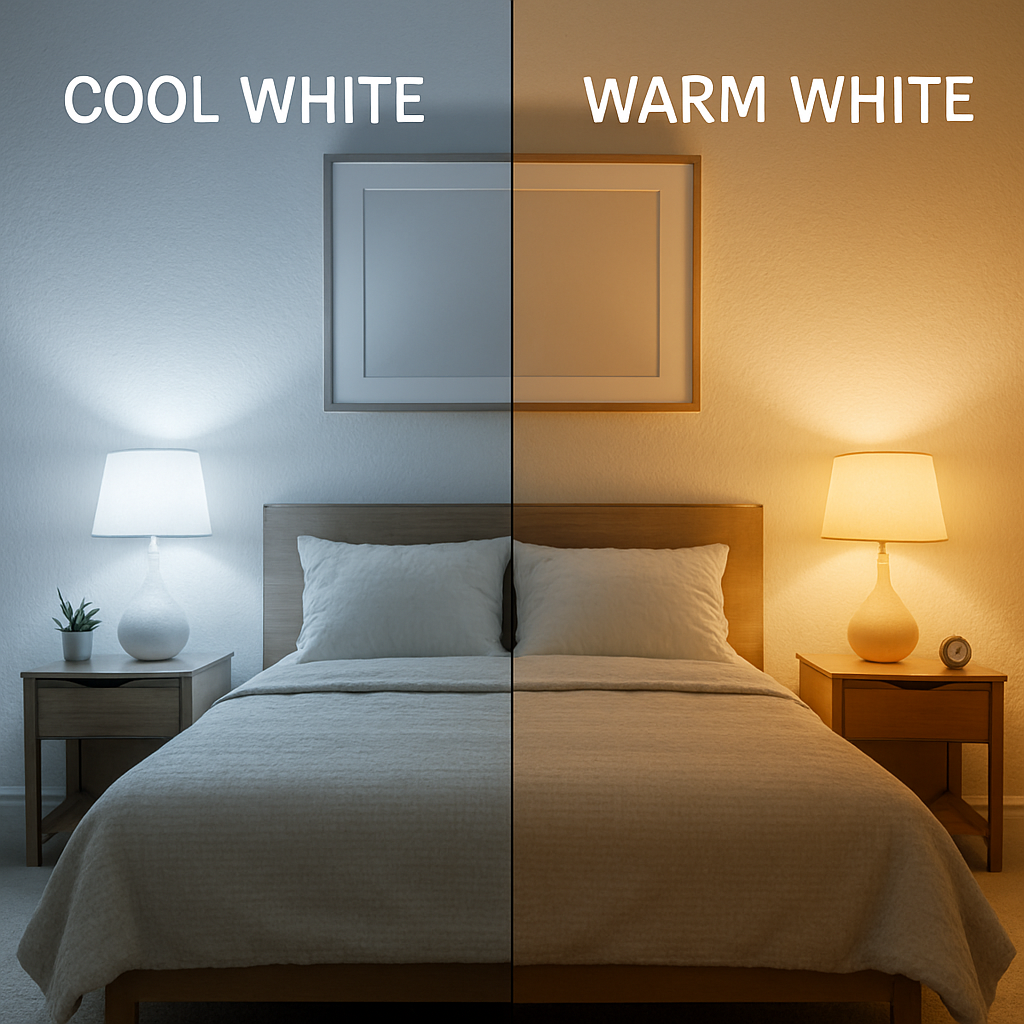
The culprit is the suppression of your natural sleep hormone. During sunset, darkness signals your brain to release melatonin so you feel drowsy. However, due to the link between melatonin production and artificial light, harsh LEDs hit the biological "pause" button on your sleep cycle.
Finding healthier bulbs requires checking Color Temperature, which is measured on the Kelvin scale. Unlike old incandescents that naturally glowed warm, modern LEDs can produce any shade. To guarantee warm color temperature benefits, match your rooms to these ratings:
2700K (Warm White): Ideal for bedrooms, mimicking a relaxing sunset.
5000K (Cool White): Reserved for garages or daytime focus areas.
Sleep experts suggest a "wind-down" routine by switching to sub-3000K bulbs 90 minutes before bed. Yet, even with perfect amber lighting, your eyes might still feel tired. If the spectrum isn't the issue, an invisible strobe effect might be the hidden culprit behind mystery headaches and eye strain.
The Secret to Flicker-Free Lighting: Ending Mystery Headaches and Eye Strain
Even if you've eliminated the blue light hazard for eyes by choosing warm colors, unexplained headaches can still strike. This discomfort relates to dimmable LED light safety and a hidden mechanism called Pulse Width Modulation (PWM). Instead of smoothly lowering power to dim like older incandescent bulbs, many modern LEDs flash on and off hundreds of times per second. While your vision blends these flashes together, your brain still processes this "invisible flicker" like a harsh strobe, causing subtle, exhausting fatigue.
The culprit is the suppression of your natural sleep hormone. During sunset, darkness signals your brain to release melatonin so you feel drowsy. However, due to the link between melatonin production and artificial light, harsh LEDs hit the biological "pause" button on your sleep cycle.
Finding healthier bulbs requires checking Color Temperature, which is measured on the Kelvin scale. Unlike old incandescents that naturally glowed warm, modern LEDs can produce any shade. To guarantee warm color temperature benefits, match your rooms to these ratings:
2700K (Warm White): Ideal for bedrooms, mimicking a relaxing sunset.
5000K (Cool White): Reserved for garages or daytime focus areas.
Sleep experts suggest a "wind-down" routine by switching to sub-3000K bulbs 90 minutes before bed. Yet, even with perfect amber lighting, your eyes might still feel tired. If the spectrum isn't the issue, an invisible strobe effect might be the hidden culprit behind mystery headaches and eye strain.
The Secret to Flicker-Free Lighting: Ending Mystery Headaches and Eye Strain
Even if you've eliminated the blue light hazard for eyes by choosing warm colors, unexplained headaches can still strike. This discomfort relates to dimmable LED light safety and a hidden mechanism called Pulse Width Modulation (PWM). Instead of smoothly lowering power to dim like older incandescent bulbs, many modern LEDs flash on and off hundreds of times per second. While your vision blends these flashes together, your brain still processes this "invisible flicker" like a harsh strobe, causing subtle, exhausting fatigue.
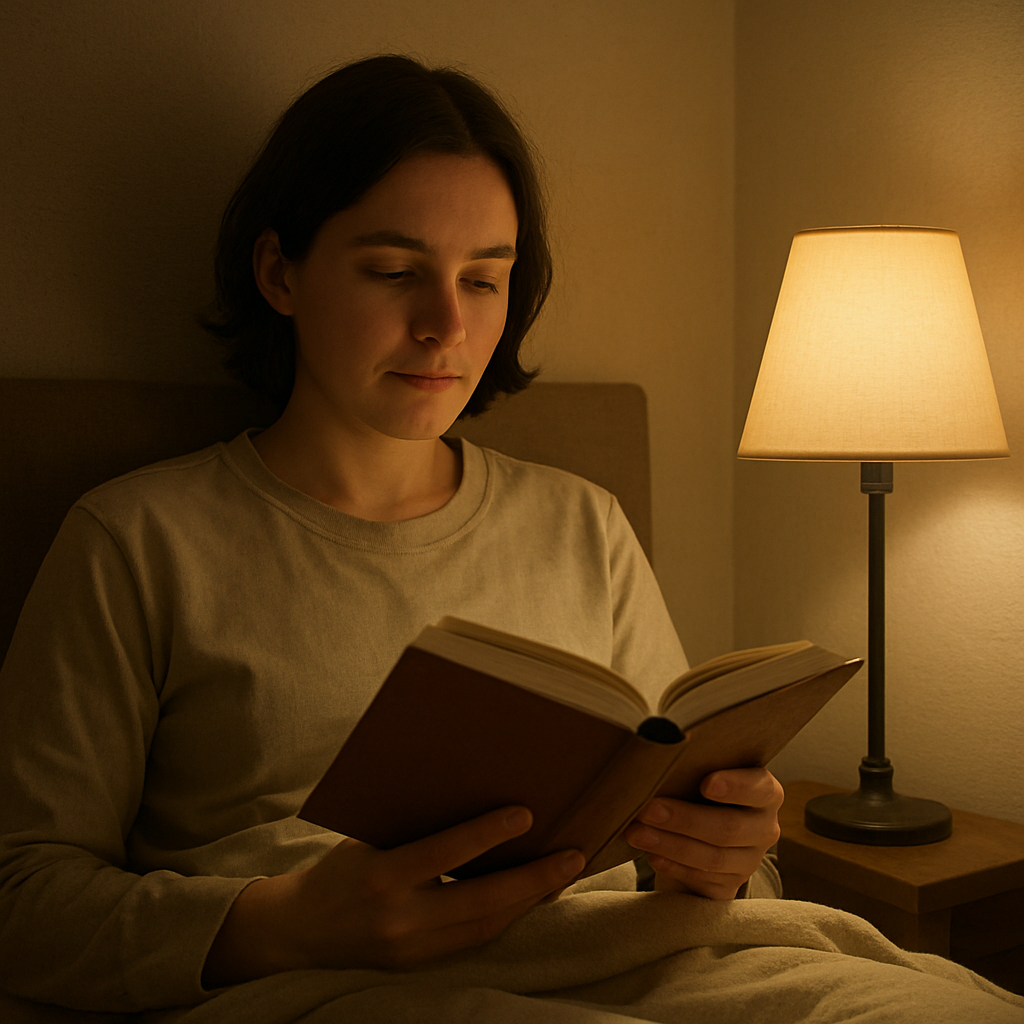
Fortunately, detecting the cheap components responsible for this strobe effect doesn't require specialized lab equipment. Simply open your smartphone camera and point it at an illuminated bulb. If thick, rolling dark lines appear on your screen, the fixture uses a low-quality driver. Reducing eye strain from bedroom lighting requires replacing these offenders with high-quality alternatives engineered to deliver a steady, continuous stream of illumination.
Securing true flicker-free LED bulbs for bedrooms guarantees your eyes can finally relax without processing hidden photobiological stress. Once you know how to dodge these invisible triggers, shopping for the right fixtures becomes incredibly straightforward by checking for specific certifications and smart features.
How to Choose Safe Bedroom LEDs: From Certifications to Smart Features
Navigating the lighting aisle shouldn't require an engineering degree. When figuring out how to choose safe bedroom LEDs, check the packaging for Color Rendering Index (CRI). Just like sunlight reveals true colors, a high CRI makes your room feel natural and relaxing, easily meeting modern photobiological safety standards for visual comfort without washing out your environment.
To guarantee peace of mind before your next hardware store run, prioritize this checklist of specifications:
2700K (replicates that cozy, old-school incandescent warmth)
CRI 90+ (ensures high color quality and natural tones)
Flicker-Free (prevents invisible strobe effects and headaches)
UL/ETL listed (certifies rigorous physical and fire safety testing)
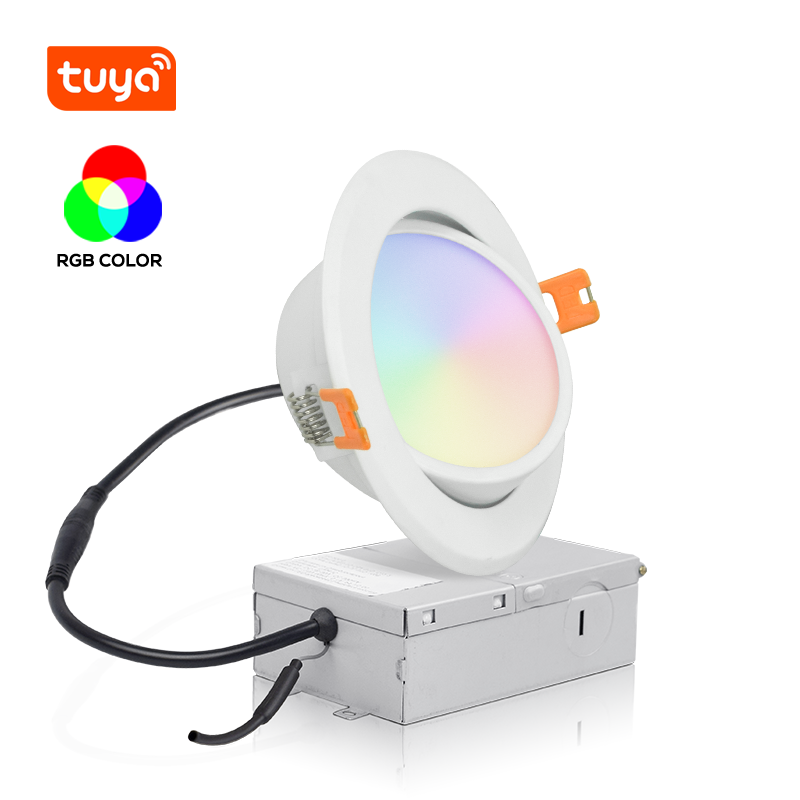
Automating these specifications offers the ultimate biological protection for your sleep cycle. When weighing smart bulbs versus traditional LEDs, smart fixtures let you schedule automatic dimming and color warming at sunset, removing the guesswork from sleep health. Upgrading your environment is a straightforward process that instantly improves your nighttime routine.
Creating a Safer, Smarter Bedroom Lighting Setup
You once wondered if high-tech bulbs were a healthy bedroom choice. Now, you understand that the safety of LED lights goes beyond cool-to-the-touch fire prevention—it’s about matching light spectrums to your biological rhythms. You can confidently bypass harsh, flickering bulbs in the hardware aisle and easily select warm, sleep-friendly options.
Start tonight by swapping your brightest bedside bulb for a warm, amber alternative. Prioritizing LED light safety ensures you no longer have to choose between energy efficiency and peaceful rest. Quality lighting is simply a direct, accessible investment in your daily health.